1. Root depth beats species choice
This is the single most under-appreciated fact about storm resilience.
A plant watered briefly every day roots shallowly, because that is where the water is. It looks identical to a well-rooted plant right up until the first serious blow, when it goes over.
A plant watered deeply and infrequently sends roots down chasing moisture. It has an anchor. The species is the same; the outcome is not.
That means hurricane preparation genuinely begins the day you plant, and continues every time you water. Deep and infrequent, from the start. See the watering guide.

2. Species that hold up
Silver buttonwood. Florida native, evolved on exposed coastal sites. Flexible growth that bends rather than snapping, and salt tolerance for the spray that comes with surge.
Cocoplum. Native, dense, low-growing enough that it presents little sail area. One of the most storm-reliable hedges available.
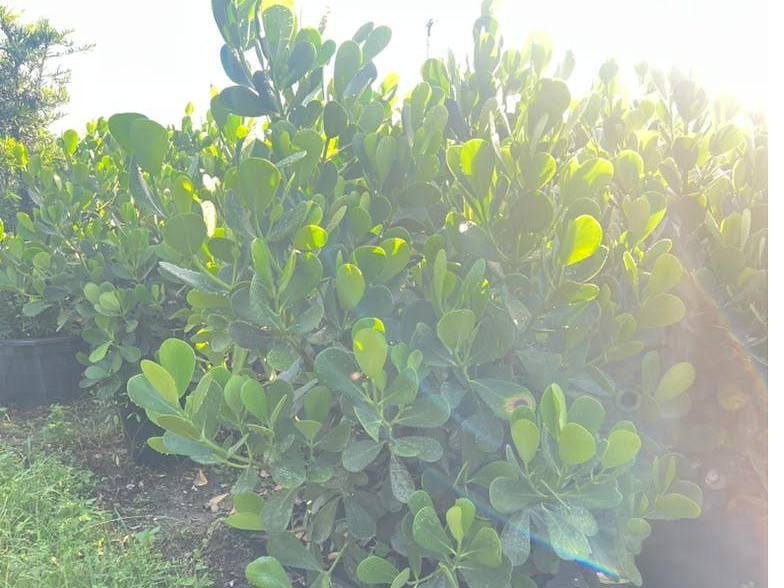
Clusia. Thick leathery leaves and a solid structure. It can lose foliage in a serious blow and reliably comes back.
Saw palmetto. Effectively immovable. Low, tough, and its growth point sits protected.
Native palms. As a group, palms handle wind exceptionally well — the trunk flexes and fronds shed load rather than resisting it.
Species to be cautious with near structures: anything brittle, anything top-heavy, and anything with a shallow spreading root plate relative to its height.
3. Siting and spacing
- Group plantings. Plants in a mass shelter one another and share wind load. An isolated specimen takes the full force alone — this is the difference most people overlook.
- Keep large material away from structures. Anything that could reach a roof, a car or a power line when it falls is worth siting deliberately.
- Do not plant too deep. Counter-intuitively, a plant set too deep anchors worse, not better — the root flare needs to be at grade so lateral roots spread properly. See how to plant a shrub.
- Wide holes, not deep ones. Two to three times the root ball width encourages the lateral spread that provides anchorage.
4. Before, during and after the season
Before 1 June: thin dense canopies so wind passes through rather than pushing over. Remove dead and damaged wood. Clear drainage — flooding causes as much plant loss here as wind.
When a storm is named: move containers indoors. Do not prune heavily — fresh cuts are open wounds and cut material becomes projectiles. Do not fertilise; soft new growth is what fails first.
Afterward: wait several weeks before deciding anything is dead. Defoliated plants frequently releaf. Reset leaning plants within days rather than weeks. Rinse salt off foliage after surge. Hold off fertiliser until new growth appears.
Full checklist in preparing your Miami yard for hurricane season.
Replanting after a storm? We grow wind-tolerant species and can advise on siting so the same thing does not happen again. Get in touch.