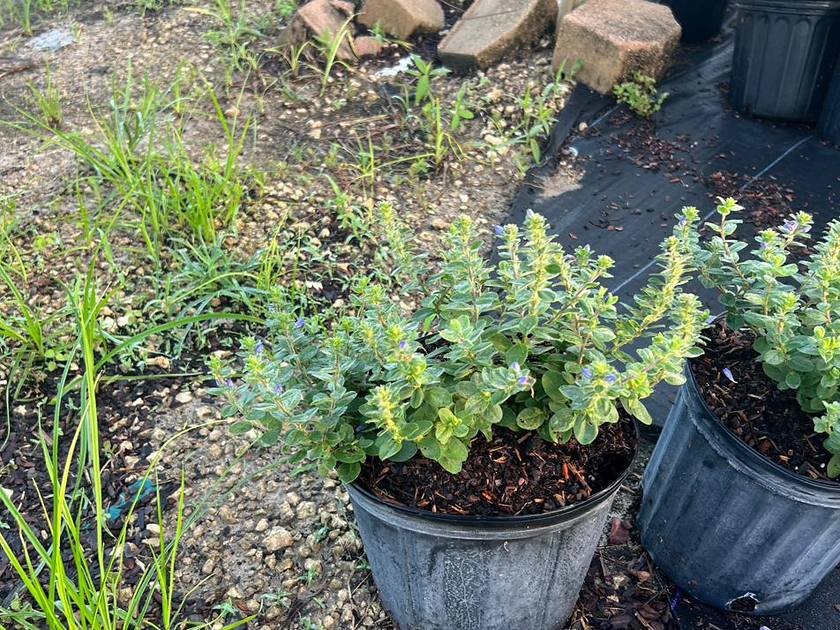
1. Width matters more than depth
Dig two to three times the width of the root ball. Loosened soil either side gives new roots somewhere easy to spread laterally, which is exactly where they want to go in sandy ground.
Depth does the opposite of what people expect. A hole dug deeper than the root ball settles over the following months and the plant sinks with it. Dig to the height of the root ball and no more — if you overdig, firm the base back before setting the plant.

2. Set it high
Position the plant so the top of the root ball sits one to two inches above surrounding grade.
It will look slightly too high when you finish. That is correct. Soil settles, and a plant set flush ends up sitting low, which keeps the stem base permanently damp and invites rot.
Check from a few feet back at eye level, not from directly above. Plants set at an angle are much easier to spot from a distance.
3. Backfill with what you dug out
The instinct is to fill the hole with rich imported soil. In Miami-Dade that instinct works against you.
A pocket of soft rich mix inside surrounding sand creates a bathtub effect: water collects where the amended soil meets the native ground, and roots circle inside the comfortable zone rather than pushing out into the soil they need long term.
Backfill with the soil you removed. Break up clumps, mix in a modest amount of compost if the native material is nearly pure sand, and water as you fill to collapse air pockets. Firm gently with your hands — do not stamp it.
4. Mulch, but keep it off the stem
Two to three inches of mulch in a wide ring around the plant. It moderates soil temperature, holds moisture and suppresses weeds.
Keep mulch three to four inches clear of stems and trunks. Piled against bark it holds moisture exactly where you do not want it, and that is a slow way to kill a healthy plant.
Mulch the whole bed rather than a small circle per plant where you can — it looks more considered and works better.
5. The first eight weeks
New plants have a root system sized for the container they came in. Until roots grow outward they cannot reach much water.
- Weeks 1–2: water every other day
- Weeks 3–8: twice a week
- Months 3–6: weekly, reducing
- After that: rainfall, with extra only in extended dry spells
Deep and slow beats brief and frequent. Short daily sprinkling trains roots to stay shallow, which is the opposite of what you want before hurricane season.
Hold off on fertiliser for the first two months. See our fertilising guide.
Would rather not dig in Miami heat? We plant what we sell — correct depth, spacing and backfill. See the planting service or call (786) 283-3401.