In this guide
1. What you are actually paying for
A privacy hedge is not one cost — it is four stacked together: the plants, delivery, soil amendment, and labour to install. When a neighbour quotes you a number, ask which of those four it includes. A per-plant price and an installed price are very different animals.
Because we grow the plants at our own nursery in the Redland, we can separate those line items for you instead of hiding them in a single figure.

2. Per-plant pricing by species
The plant itself is the biggest variable, and it is driven by both species and container size. As a rough Miami guide for common privacy species:
- Areca palm — often the cheapest fast screen per plant, but it clumps wide so you need fewer of them.
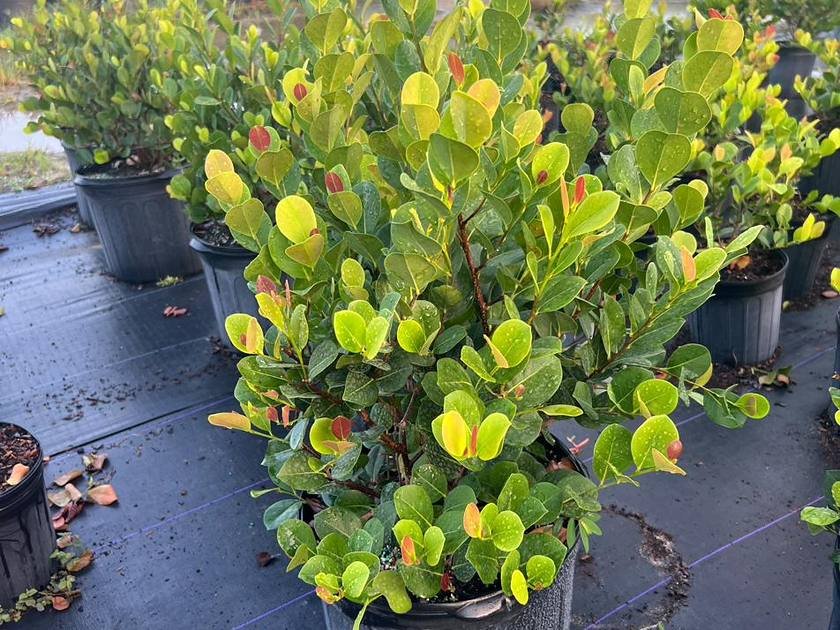
- Clusia — mid-range and fast; excellent value because it fills quickly from a moderate size.
- Cocoplum — mid-range, native, salt tolerant, moderate speed.
- Podocarpus — usually the priciest per plant for a formal wall, and you need more of them because they stay narrow.
- Silver buttonwood — mid to high; often bought as larger specimen material.
Container size changes the price several times over. A 3-gallon plant costs a fraction of a 15-gallon of the same species — but the 15-gallon gives you privacy years sooner. That trade-off is the heart of the budget conversation.
3. Cost per linear foot
Linear foot is the number that actually matters, because it folds spacing into the price. Two clusia at 3 feet on centre cover more fence than three podocarpus at 2 feet, so comparing per-plant prices across species is misleading.
Worked example. A 60-foot fence line planted with clusia at 3 feet on centre needs about 21 plants. The same run in podocarpus at 2 feet needs about 31. Even if the podocarpus is only slightly more per plant, the tighter spacing makes the run considerably more expensive.
This is why we quote by the run, not by the pot.
4. Installed versus doing it yourself
Labour is real money in Miami sand and limestone. Digging planting holes in oolitic rock is hard work, and a long hedge line is a full day or more for a crew. If you are fit, have a weekend, and the run is short, DIY can save a meaningful share of the total — see our DIY versus professional planting guide.
For long runs, larger stock, or ground that turns out to be solid caprock a foot down, installation is usually worth it: the plants are heavy, spacing matters, and getting the grade and depth right is what stops plants failing in year one.
5. What drives the price up
- Larger starting size — the single biggest lever; you pay to skip the waiting.
- Tighter spacing — more plants per foot for faster coverage.
- Hard ground — shallow limestone means more labour per hole.
- Access — a back yard reached only through the house costs more to plant than a driveway-side bed.
- Soil amendment and mulch — worth doing in Miami sand, but it is a line item.
6. How to get a good hedge for less
Three moves lower the total without lowering quality. Buy grower-direct so you are not paying a garden-centre markup. Choose the right size, not the biggest — mid-size stock at correct spacing often screens nearly as fast as premium material for much less. And stage the project if budget is tight: do the most-overlooked stretch first and add to it next season. We are happy to plan it that way with you.
Send us your run length, how much depth you have and your target height. We grow the plants ourselves, so we can quote grower-direct pricing and tell you honestly where to spend and where to save. Get a quote.