In this guide
1. The five conditions that decide everything
Miami weather is not simply hot. It applies five separate pressures, and a plant has to pass all of them.
- Sun intensity. Not just duration — the angle here is punishing. Species bred for northern light scorch.
- Sustained heat. Months where nights barely drop. Plants that need a cool period to reset never get one.
- Wet season saturation. Roughly May to October, near-daily rain. Anything intolerant of wet feet drowns.
- Dry season drought. November to April can go weeks with nothing. The same plant that survived the flood now has to survive the drought.
- Salt. Within reach of much of the county, carried inland on wind further than people expect.
A plant that handles four out of five will look fine for a year and then fail in whichever season exposes the gap.

2. What survives as a hedge
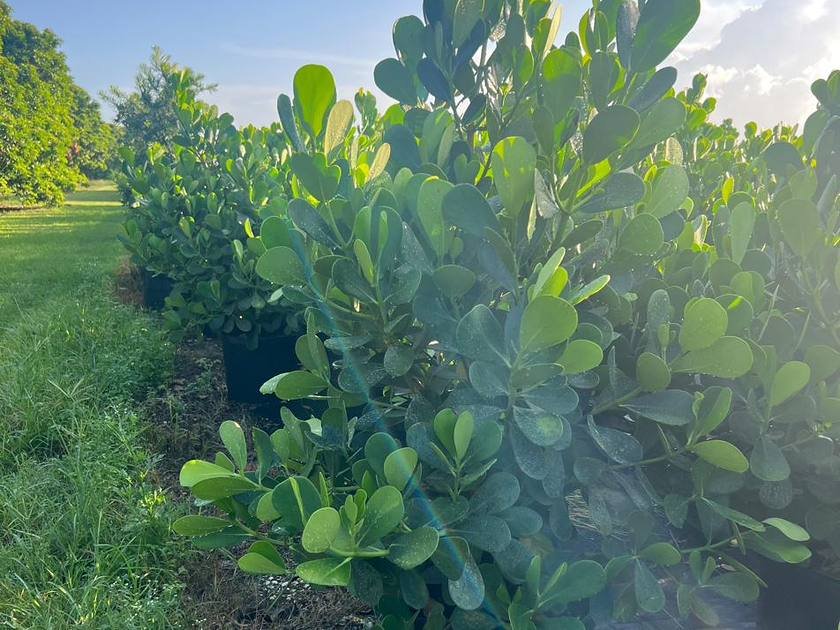
Clusia is the strongest all-round performer. Thick waxy leaves resist both sun scorch and salt burn, it tolerates drought once established, and it does not mind sitting through the wet season. It also recovers from being cut back hard, which matters after a storm.
Cocoplum, a Florida native, handles the most exposed coastal positions. Its salt tolerance is exceptional and it needs very little water once rooted.
Silver buttonwood, also native, brings silver-grey foliage and shrugs off wind and salt in combination — the pairing that kills most alternatives.
Compared properly in best privacy hedges for Miami.
3. What survives while still giving colour
Colour is where people over-reach, choosing something spectacular that cannot take the conditions.
Ixora flowers nearly continuously in full sun and handles heat well. Its weakness is soil chemistry rather than weather — it is prone to iron lockout in our alkaline ground.
Copperleaf delivers bronze and crimson through foliage rather than flower, so there is no off-season and nothing to deadhead. Full sun deepens the colour.
Variegated arboricola is the shade answer, holding gold-and-green under canopy where flowering species simply stop performing.
4. What survives on rainfall alone
Once established, these need essentially nothing beyond what falls from the sky.
Variegated agave is close to indestructible — architectural, drought-proof, unbothered by heat, and it asks for no feeding at all. Site it clear of paths; the leaf tips are genuinely sharp.
Variegated flax lily holds cream-edged form in sun or partial shade with almost no attention.
Blue daze spreads low, flowers most mornings, and thrives in hot exposed strips where turf gives up.
More in low-maintenance plants for Miami yards and Florida natives that thrive on neglect.
5. The three mistakes that cause most failures
Planting for one season. A species chosen because it looked good in May meets the wet season in July. Judge a plant on the worst month, not the best.
Ignoring drainage. Standing water kills more plants in Miami-Dade than drought ever does. Test before planting — fill a foot-deep hole and if it has not drained in two to three hours, plant on a mound or change the spot.
Buying stock grown somewhere else. A plant raised under shade cloth or trucked in from a cooler region has never been tested by these conditions. It looks better on the sales lot and worse in your yard six months later. That is much of the argument for buying grower-direct.
Not sure what your conditions actually are? Photograph the space at morning, midday and late afternoon. That tells us the sun exposure, which decides most of the plant list. Send them over.