In this guide
1. Why grower-direct delivery differs
A retail garden centre buys from a grower, holds stock on a paved lot, and sells what remains. By the time a plant reaches a customer it may have spent weeks in a container on hot asphalt, under intermittent watering, with roots circling.
Buying direct from the nursery removes that stage. Plants are lifted from the growing rows, loaded, and delivered — usually the same day. The practical difference shows up in the six weeks after planting, when a plant that has not been stressed twice already establishes noticeably faster.
It also means what you see is what is loaded. On a large order it is worth coming to the nursery and tagging the actual plants, particularly for hedging where matched grading matters more than average size.
2. Getting the order right first
The information that makes a quote accurate is short but specific.
- What. Species and container size, or the outcome — “sixty feet of six-foot screening” — and we will specify it.
- How many. For hedging, the run length and desired spacing give the count.
- Where. Full delivery address, because distance and access both affect the figure.
- When. Ideally the day you intend to plant, not a week before.
- Who unloads. Whether you have people and equipment on site, or need us to handle it.
Order the plants for the day you will plant them. Plants sitting in containers on a driveway for a week in June lose more condition than most people expect — and watering them in place is nobody’s idea of a good weekend.
3. Access, and what actually blocks a delivery
Access is the most common cause of a delivery going wrong, and almost always for reasons that could have been checked in five minutes.
| Check | Why it matters |
|---|---|
| Gate width | A 15-gallon container is roughly 16–18 inches across; a pallet jack needs more |
| Overhead clearance | Low branches and power lines constrain a loaded truck |
| Turning space | Cul-de-sacs and narrow drives can prevent a truck reversing to the drop |
| Surface | Soft ground after rain will not carry a loaded vehicle |
| Drop distance | Every extra 50 ft of carry adds real time to unloading |
| HOA or building rules | Some communities restrict delivery hours or vehicle size |
If access is genuinely tight, the answer is usually a smaller vehicle and more trips, or a kerbside drop with a wheelbarrow shuttle. Both are workable — they just need to be known in advance rather than discovered on the day.
4. Weights and unloading
Container weights surprise people. Soil is heavy and wet soil is much heavier.
| Container | Approximate weight | Handling |
|---|---|---|
| 3 gallon | 15–25 lb | One person, easily |
| 7 gallon | 35–50 lb | One person, awkward |
| 15 gallon | 90–120 lb | Two people or a dolly |
| 25 gallon | 150–200 lb | Two people minimum, or machinery |
| 45 gallon | 300 lb+ | Machinery |
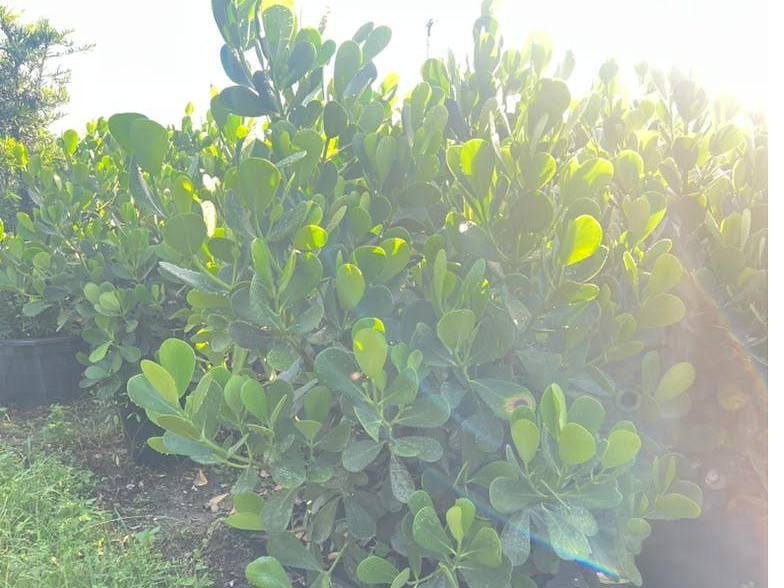
A sixty-foot clusia hedge in 15-gallon containers is roughly thirty plants — around 3,000 pounds of material. That is a straightforward truck load, but it is not something to move by hand on a Saturday afternoon without planning.

5. Timing the drop
Morning deliveries are better for the plants, particularly between May and September. Material that arrives at 8am can be planted or moved into shade before the worst heat; the same load at 2pm sits in full sun through the hottest hours.
If planting is happening over several days, staged deliveries work better than one large drop. Plants stay in the nursery, under proper irrigation, until the day they are needed.
6. What to do the moment plants arrive
- Get them out of direct sun if planting is not immediate. Containers heat up fast, and roots against the sunny side of a black pot cook.
- Water within the hour. Containers dry out far faster than ground, and a truck journey is drying.
- Group them close together. Plants shade each other’s pots — a tight block holds moisture much better than a spread-out line.
- Check the count and grading against the order before the driver leaves.
- Keep watering daily for as long as they remain in containers.
Container plants can hold for a week or two if watered properly, but every day in the pot is a day not establishing. Plan to plant within a few days.
7. Where we deliver
We deliver across Miami-Dade County from the nursery at 19995 SW 177th Ave — Homestead, Kendall, Pinecrest, Palmetto Bay, Cutler Bay, Coral Gables, Doral, South Miami, Florida City and the surrounding areas. Delivery is quoted on distance, load size and access rather than a flat rate, because those three factors genuinely change the job.
See service areas for the full list, or plant delivery for how to book. If you want the plants put in the ground as well, nursery planting covers that.
Frequently asked questions
Do you deliver plants across Miami-Dade?
How much does plant delivery cost in Miami?
How heavy is a 15-gallon plant?
How long can plants sit in containers before planting?
What do you need to know to quote a delivery?
Can I choose the actual plants before delivery?
Do you deliver on weekends?
References & further reading
- UF/IFAS EDIS — nursery stock handling and establishment
- Florida Department of Agriculture and Consumer Services — nursery regulation
Send us the list and the address. We will confirm availability, quote the delivery, and schedule it for the day you actually intend to plant. Get a quote or call (786) 283-3401.