In this guide
1. Why a container is harder than the ground
Three things change the moment a plant is in a pot rather than the earth.
Temperature swings are extreme. A dark pot in Miami sun can reach temperatures that damage roots directly. The ground buffers heat; a container amplifies it.
Water is finite. An in-ground plant can send roots outward. A container plant has exactly what is in the pot, and in August that can be gone in a day.
Then it floods. Wet-season rain fills a container faster than it drains, and roots sitting in water suffocate. The same pot swings between drought and flood within a week.

2. Choosing the pot
- Bigger than feels necessary. Fourteen to eighteen inches minimum for a shrub. Larger volume means more water reserve and more thermal buffer.
- Light colours run cooler. A pale pot in full sun is measurably kinder to roots than a black one.
- Drainage holes must be genuinely open. Check them. Many decorative pots have holes that are too small or partly closed.
- No saucers in the wet season. A saucer that holds standing water is a root-rot machine in Miami. If you use one indoors, empty it.
- Terracotta breathes but dries faster. Good for succulents and agave, harder work for anything thirsty.
3. Mix, not garden soil
Do not fill a container with soil from the yard. It compacts, drains poorly in a pot, and brings weeds and pathogens with it.
Use a bark-based container mix that drains freely. In Miami the priority is drainage over water retention — you can always water more often, but you cannot un-drown a root system.
For agave, succulents and anything drought-adapted, add extra coarse material to open the mix up further.
Refresh the top few inches annually. Container mix breaks down and compacts over time, and a plant that was thriving in year one can be sitting in dense airless material by year three.
4. Watering and feeding
Check rather than schedule. Push a finger two inches in. Damp means wait. In peak summer a container in full sun may need daily water; in January it may need it twice a week.
Water until it runs out the bottom. Light sprinkling wets the surface and leaves the root ball dry underneath — a very common cause of container plants declining while being watered daily.
Feed little and often. Every watering flushes nutrients out of a container. Use a slow-release fertiliser with micronutrients, at a lighter rate and more frequently than you would in ground. Our fertilising guide covers the micronutrient issue in detail.
Watch for the wet season. Reduce or stop supplemental watering through the rainy months and make sure pots are not standing in water.
5. What actually thrives in pots here
Variegated agave. Ideal. Drought tolerant, architectural, and genuinely happier with the restricted root run and sharp drainage a pot provides.
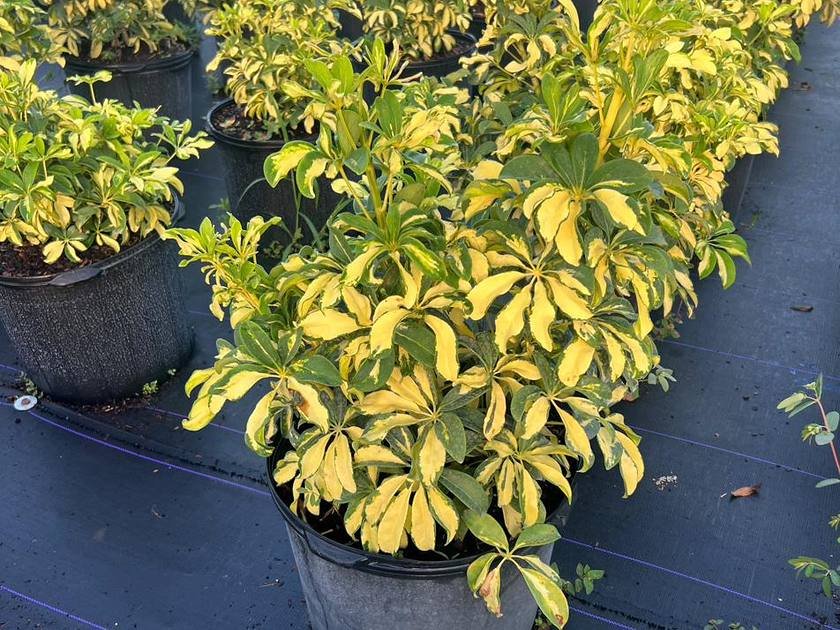
Variegated flax lily. Holds form well in a container, tolerates both sun and partial shade, and does not resent being confined.
Dwarf ixora. Works in a large pot with attentive watering, and gives continuous colour on a patio.
Blue daze. Excellent trailing over the edge of a raised container.
What struggles: anything large and fast-growing that will become root-bound within a season, and anything needing consistently even moisture — Miami containers cannot reliably deliver that.
Want plants that suit containers specifically? Tell us the pot size and the position and we will point you at species that will actually thrive. Ask us.