1. 1. The boundary you want to disappear
The most common request by a wide margin. A neighbour’s window, a road, a pool that is overlooked.
Start by standing where you actually want privacy and looking at what you want hidden — not by measuring the fence. Where that sightline crosses your boundary tells you the height, and it is often different from what people assume.
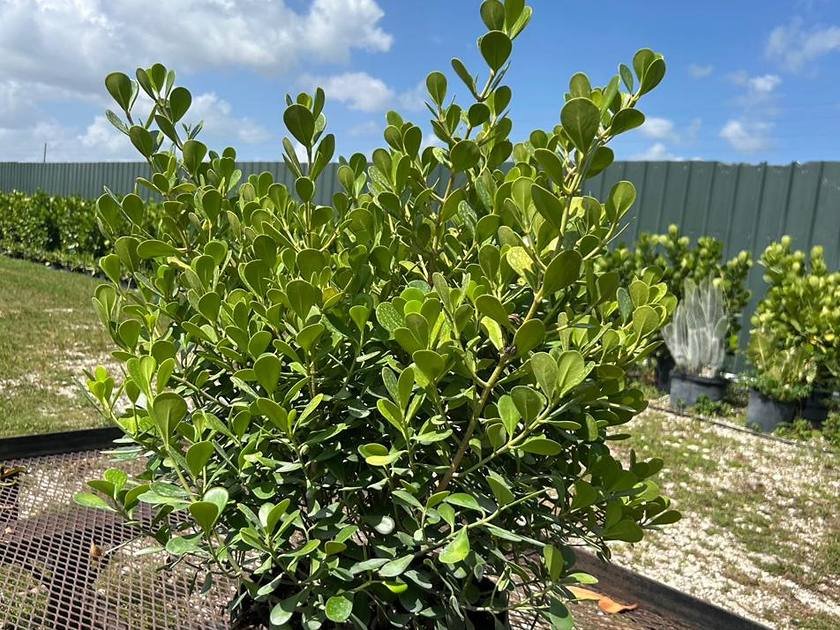
Clusia if you have three feet of bed depth. Podocarpus if you do not. Arboricola if the run is shaded. Method in planning a privacy screen.

2. 2. A frontage that has stopped working
Original planting from decades ago, now outgrowing its bed, woody at the base, dying back in patches. Usually beyond rescue.
Rather than replacing like with like, rebuild it in layers: structure at the back, mid-height mass in the middle, groundcover at the front. Three species repeated in drifts, not twelve species one of each.
Foliage colour rather than flower carries a frontage year-round — copperleaf for bronze and crimson in sun, variegated arboricola for gold-and-green in shade.
3. 3. The hot strip nothing survives in
Usually the western exposure, or a narrow run beside a driveway. Reflected heat, thin soil, irrigation that does not quite reach.
Stop trying to grow turf there. Blue daze, beach sunflower or muhly grass massed along it will thrive on exactly the conditions that were killing the grass, and remove a recurring annual problem rather than managing it.
4. 4. Poolside planting
Two constraints most people discover too late: leaf litter and root behaviour.
Avoid anything that sheds heavily — you will be cleaning the pool constantly. Avoid aggressive roots anywhere near the deck or shell.
Variegated agave is excellent here — sculptural, drops nothing, and the form suits modern poolside architecture. Site it back from where people walk. Flax lily massed along the deck edge is clean and low. Areca palm gives the resort look with manageable litter, though it needs room to clump.
5. 5. The yard you do not want to think about
A legitimate goal, and achievable.
Build the whole scheme from agave, flax lily, blue daze and silver buttonwood. All four survive on rainfall once established, need no feeding to speak of, and hold their form without shaping.
Then reduce turf, mulch properly at three inches, and group everything by water need. See low-maintenance plants.
6. 6. One thing to look at
Small gardens especially benefit from a single deliberate focal point rather than even distribution.
A mature variegated agave in a clear bed does more visual work than a dozen scattered shrubs, costs less than most people expect, and needs nothing from you afterwards.
The discipline is keeping the space around it clear. A focal point surrounded by competing planting stops being a focal point.
Send photographs of the area and describe what bothers you about it. That is usually enough for us to suggest something specific. Get in touch.