1. What container growing actually means
A nursery plant spends its whole life in a pot before you buy it. What matters is how that pot was managed.
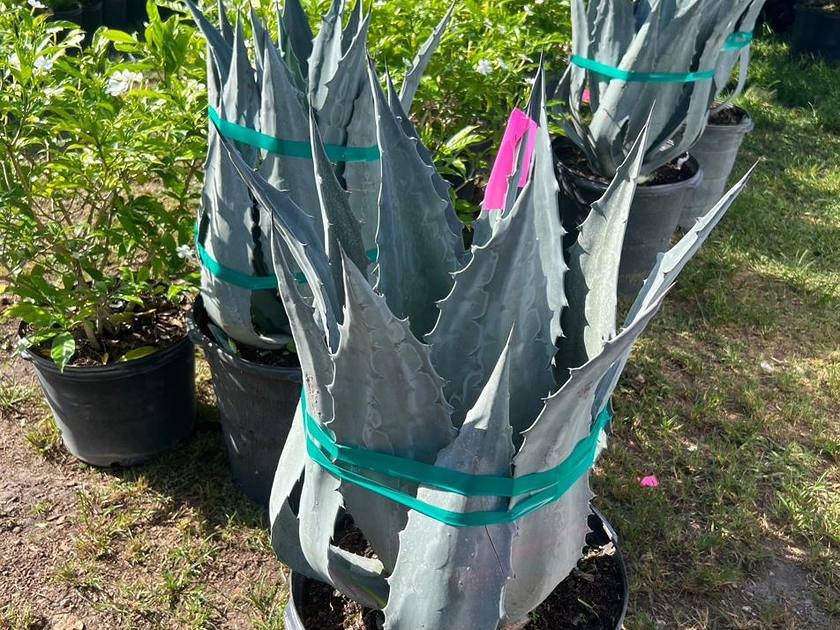
Ours sit outdoors on drainage fabric, under overhead irrigation, in full sun. They take the same August heat, the same afternoon storms and the same winter dry spell your yard does. By the time a plant leaves here it has already proved it can handle the climate.
The alternative — stock grown soft under shade cloth or trucked in from a cooler region — looks better on the sales lot and then struggles for a season once it is planted out.

2. Reading a container plant before you buy
Five things worth checking, whoever you buy from:
- Root ball firmness. Lift gently. A plant that spins in its pot was recently potted up and has not rooted in.
- Roots at the drainage holes. A few fine roots showing is healthy. A tight spiral of thick root means it has been in that pot too long.
- New growth at the tips. Good colour and full size means the plant is actively growing rather than holding.
- Even form. For hedging this matters more than anything — a run only looks continuous if the plants match.
- Leaf colour. Pale new leaves with green veins signals a micronutrient problem you would be buying into.


3. Sizes, and which one to buy
Container size is the single biggest lever on both cost and how long you wait.
Small stock is the economical choice when you have a season or two to spare. It establishes fast, because a small root system fills surrounding soil quickly.
Mid-size stock is the usual compromise for hedging — enough presence to read as a screen within a season, without specimen pricing.
Large and specimen stock buys you time directly. For a boundary you need working now, or a focal plant in a finished bed, it is frequently worth it.
Counter-intuitively, larger plants at wider spacing often cost about the same as small plants packed tight — and screen years sooner. Ask us to price both.

4. Buying for the trade
Landscape contractors, property managers and builders buy from the same rows as homeowners, with a few practical differences.
- Volume consistency. Growing our own means a long run can usually come from one batch, so colour and form match down the line.
- Phased delivery. Multi-stage jobs get material when each phase is ready rather than all at once.
- Standing availability. Tell us what you specify repeatedly and we can plan for it.
Call the nursery to discuss ongoing arrangements.

5. Availability through the growing year
Because everything here is living stock grown in the open, what is on the ground shifts through the year. Miami-Dade sits in USDA zone 10b to 11a, so plants grow almost year-round — but the pace changes. The warm, wet stretch from late spring through summer is the main flush: stock sizes up quickly and rooted material moves fast. The cooler, drier months slow growth down, and popular hedging lines can run short after a busy planting season.
None of that stops you buying, but it is worth a call before a large job. We can tell you what is ready now, what is a few weeks out, and whether a phased pickup or delivery makes more sense than waiting for one batch to finish.
Not sure what size to buy? Tell us the run length, your timeline and a rough budget — that combination decides it faster than anything else. Ask us.