

1. The three jobs most Miami yards need done
After enough site visits, residential work sorts into three problems.
Privacy. Overwhelmingly the most common request. A neighbour’s window, a road, a pool overlooked from next door. The answer is nearly always a hedge, and the two decisions that matter are starting size and spacing. See privacy plants.
A frontage that has stopped working. Original planting from the eighties that has outgrown the bed, gone woody at the base, or died back in patches. Usually a removal and replant rather than a rescue.
A bare or difficult strip. The hot western side, the narrow run along a driveway, the corner that floods. These need species matched to the specific problem rather than whatever is in flower at the garden centre.

2. Working with a small lot
Most Miami-Dade residential lots are tighter than the plants people want to put on them.
- Check mature width, not pot width. A clusia planted a foot inside your boundary will be over the line in a few years, and that conversation with a neighbour is easier avoided than had.
- Leave working room. Two to three feet between a hedge and a fence, so air moves behind it and you can physically trim the back.
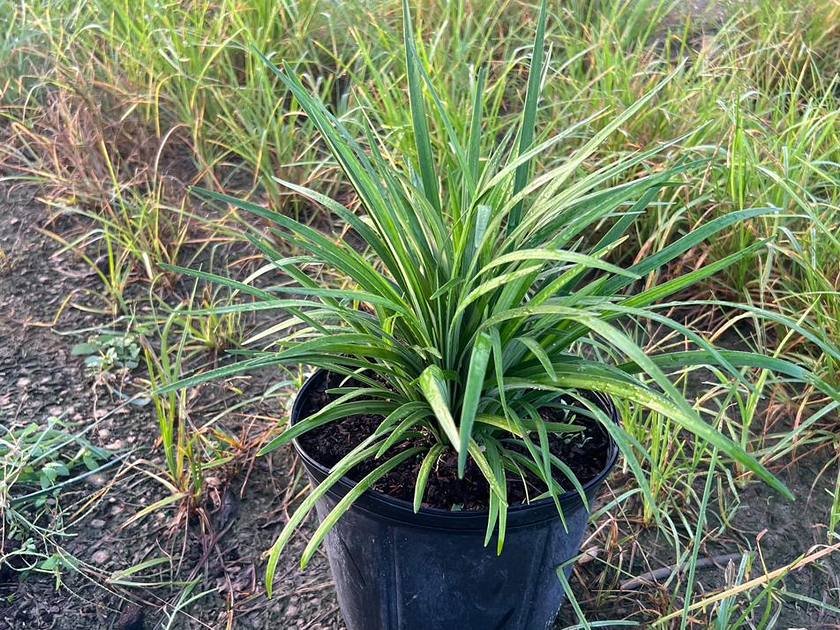
- Use compact varieties near paths. Dwarf ixora rather than standard, flax lily rather than something that will flop across a walkway.
- Mass fewer species. Three species repeated reads as designed. Twelve species reads as a collection.

3. What a residential project involves
- Site visit. Fifteen minutes on the property tells us more than an hour on the phone — sun, drainage, access, sight lines and what is already there.
- Quote. Plants, delivery and labour broken out separately so you can see exactly what you are paying for and adjust.
- Schedule. Material comes from our own rows, so we are not waiting on a supplier.
- Install. Correct depth, correct spacing, backfilled with native soil, watered in, mulched clear of the stems.
- Aftercare. A watering schedule specific to what went in, and a phone number that still answers.

4. Plant quality shows most on a small lot
On a compact Miami lot there is nowhere for a weak plant to hide. Every specimen sits within a few feet of a path, a window or the front door, so the quality of the individual plant — not just the design — decides how the yard reads.
That is the practical case for buying grower-direct on residential work. Plants come out of the ground the day they are planted, root systems intact, rather than sitting in pots through a supply chain. Healthy roots at planting are what let a small scheme fill in cleanly instead of limping through its first summer.
It also keeps the plant list realistic. Because we grow what we plant, we quote from what is genuinely available at the right size — so the yard you are shown is the yard you get. See grower-direct sales and installation.
Book a site visit. Bring your questions and a budget range — we will tell you honestly what is achievable within it. Request a visit.